
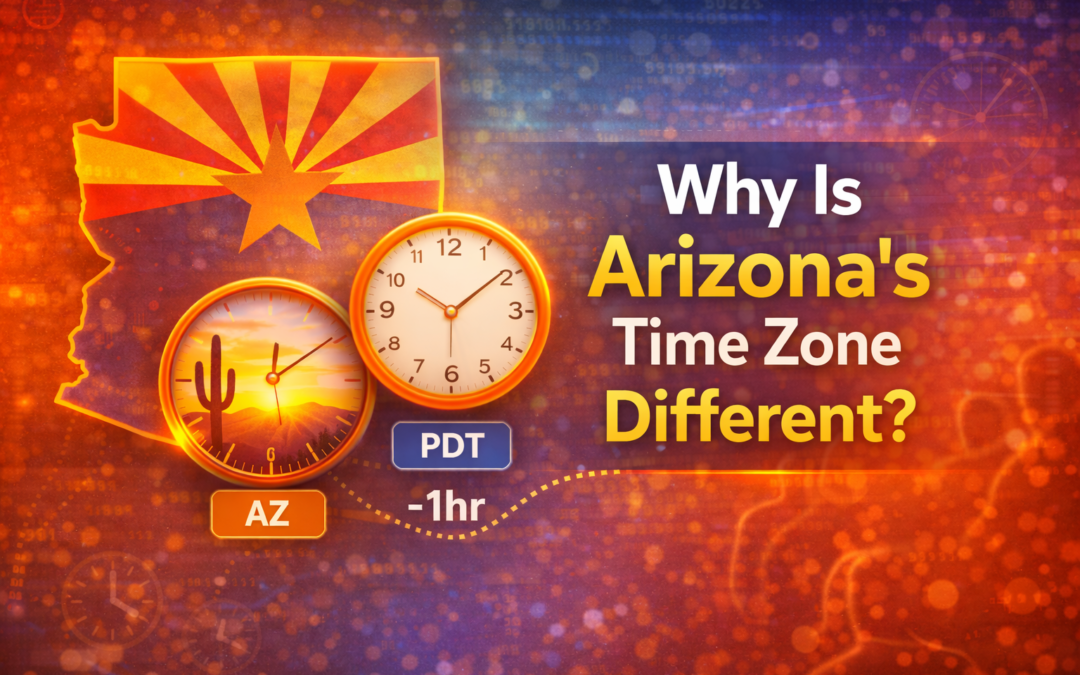
Arizona stands out in the U.S. because of its unique time zone practices. While most of the country observes Daylight Saving Time (DST), Arizona does not.
The state remains on Mountain Standard Time (MST) year-round, not just a quirky choice but one grounded in environmental, historical, and practical reasons.
Let’s explore why Arizona’s time zone is different and how it affects residents’ daily lives.
The Historical Reason Behind Arizona’s Unique Time Zone
Arizona’s decision to remain on Mountain Standard Time year-round stems from practical concerns about its climate. During the 1960s, Arizona briefly adopted DST, as did many other U.S. states. However, the extended daylight hours worsened the state’s extreme summer heat, especially in cities like Phoenix.
Realizing that the extra daylight only exacerbated the discomfort, Arizona decided to remain on MST to avoid the hot summer evenings and save energy.
This decision was further solidified by the state’s recognition that staying on standard time would provide more predictable schedules for businesses and residents. By staying on MST, Arizona offered its residents a more stable routine without the disruption of twice-yearly clock changes. This consistency made it easier for Arizona’s business sector to operate year-round, avoiding unnecessary confusion when working with businesses in other states.
Arizona’s Decision to Stay on Mountain Standard Time
The choice to stay on Mountain Standard Time in Arizona is largely due to the state’s environmental conditions. The state’s scorching summers made it uncomfortable for residents when daylight lasted into the evening, so choosing a consistent time year-round made sense. This decision provided a simple, predictable routine for Arizona residents and businesses alike. Arizona avoided the annual disruptions caused by clock changes, which was especially helpful for residents.
As businesses in other states adjusted to the time change during DST, Arizona maintained a constant schedule. This decision was not just for comfort but also for efficiency, as businesses could plan with greater accuracy when there were no time changes. The consistency of MST allowed people in Arizona to better plan and execute their day-to-day activities without any confusion around time changes.
Understanding why Arizona decided to reject DST can be further explored in why time zones were created. This background helps explain how timekeeping became standardized and why Arizona diverged from the national trend.
The Navajo Nation Exception to Arizona’s Time Policy
An important nuance in Arizona’s time zone policy is the Navajo Nation, which observes Daylight Saving Time. This exception in the northeastern corner of Arizona highlights the complexities of timekeeping in the state. The Navajo Nation is the largest Native American tribe in the U.S., and its decision to follow DST aligns it with neighboring states like New Mexico and Utah. This allows the Navajo Nation to stay in sync with those regions for travel, business, and cultural purposes.
While this exception might seem contradictory in a state that doesn’t observe DST, it makes practical sense. The Navajo Nation spans parts of Arizona, Utah, and New Mexico, and adhering to the same time schedule as the surrounding areas facilitates easier coordination. For travelers and businesses operating in the Navajo Nation, this shift to DST can help align their activities with the broader regional time zone.
The complex relationship between Arizona and the Navajo Nation’s time policies underscores the varied nature of time zone practices in the region. If you’re curious about why such discrepancies occur, learning about why they change the time will offer deeper insights into the evolution of time policies.
Arizona’s Time Policy and Its Impact on Travel
For those traveling to and from Arizona, understanding the state’s time zone policy is crucial. Arizona’s refusal to follow Daylight Saving Time means that there’s a time difference between the state and its neighboring regions during the summer months. For example, while most of the Mountain Time Zone shifts an hour ahead during DST, Arizona stays on MST, resulting in a one-hour difference with states like New Mexico.
This time difference can sometimes cause confusion when coordinating schedules, especially for those unfamiliar with Arizona’s time zone system. However, once travelers understand the state’s year-round MST schedule, planning becomes more straightforward. Arizona residents benefit from MST’s consistency, while visitors need to factor in the time difference when making travel arrangements.
The relationship between Arizona’s time policies and other regions is important for understanding how time impacts business and personal travel. To gain a better grasp of global time standards, you can learn about how we know what time it is.
The Environmental Influence on Arizona’s Time Decision
One key factor behind Arizona’s rejection of DST is its climate. Arizona’s intense summer heat made it uncomfortable to extend daylight into the evening. By sticking to Mountain Standard Time, the state ensured that the hottest part of the day—afternoon—occurred before sunset, reducing the need for excessive cooling in homes and businesses.
This decision was a pragmatic one. Arizona’s climate was not suited for the extended daylight that DST would have caused. The state’s residents preferred the consistent schedule that came with MST year-round, avoiding the seasonal discomfort associated with longer daylight hours.
Arizona’s time policy and its influence on residents’ daily lives are better understood when you consider factors such as the state’s unique climate. Understanding such considerations is crucial for seeing why the state took such an unusual approach to timekeeping.
The Benefits and Challenges of Arizona’s Unique Time Zone
Arizona’s time policy comes with both benefits and challenges. On the positive side, the state’s decision to forgo Daylight Saving Time means no need for clock changes twice a year. This makes scheduling easier, as both businesses and individuals can rely on a consistent time system year-round. Moreover, staying on MST year-round helps save energy, as there is no extended daylight to unnecessarily heat homes and offices.
However, there are some downsides to Arizona’s unique approach. The biggest challenge arises when dealing with neighboring states that observe DST. For travelers or businesspeople coordinating with people in states like Utah or New Mexico, the time difference during the summer months can create confusion. This time zone difference can make it difficult to plan meetings, phone calls, or travel schedules.
This mix of benefits and challenges highlights how time policies affect everyday life and business in Arizona. As the state continues to evolve, the debate around its time policies may shift, though Arizona’s consistency has served it well so far.
How Arizona’s Time Policy Aligns with Broader U.S. Practices
In the U.S., time zones were created to standardize timekeeping across the country, making it easier to coordinate activities like travel and business. Arizona, however, deviates from most states by opting out of Daylight Saving Time. While most of the country shifts its clocks in the spring and fall, Arizona’s choice to stay on MST allows it to operate without the interruptions caused by time changes.
This choice has become an integral part of Arizona’s identity. The state benefits from the simplicity of a consistent time system, while also avoiding the disruptions that accompany DST. Arizona’s time policy is a good example of how regional factors—such as climate—can shape a state’s timekeeping decisions.
For a deeper understanding of why time policies are the way they are, you can explore why there are 7 days in a week, offering context about the global time-keeping system.
Conclusion
Arizona’s decision to not observe Daylight Saving Time sets it apart from most of the U.S. While other states adjust their clocks twice a year, Arizona stays on Mountain Standard Time year-round. This decision was made to accommodate the state’s unique climate, as the extended daylight hours during the summer months made the heat even more unbearable.
While this policy creates some confusion, especially for travelers, it provides residents and businesses with a consistent time schedule. Arizona’s time zone remains one of the state’s defining features, making it a place with unique time practices that are unlikely to change anytime soon.